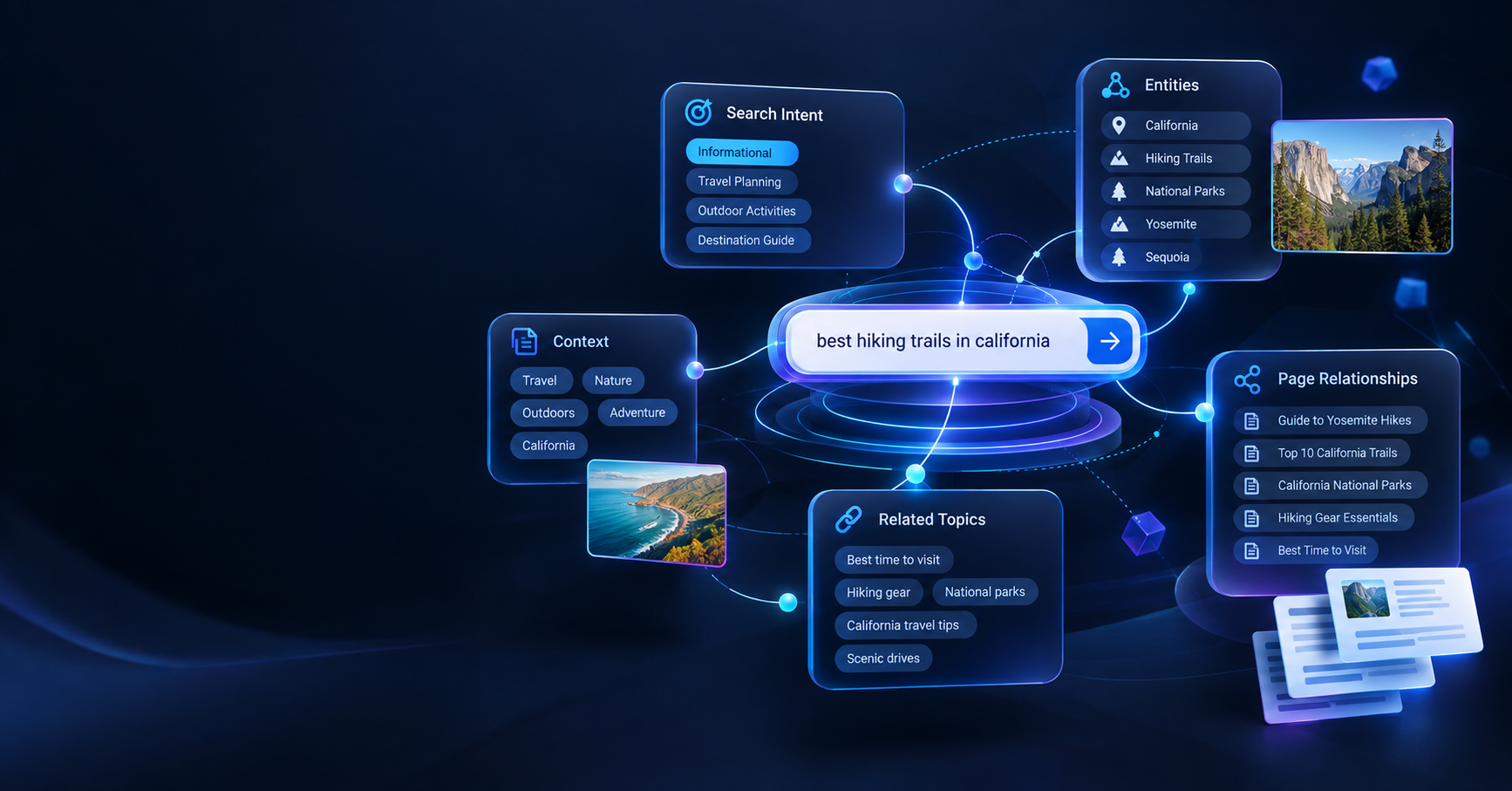
What is semantic SEO and how does it basically work? In simple terms, semantic SEO means writing content that matches the full meaning behind a search, not just the exact words a person types. Search engines today read a page the way a person reads it. They look at intent, related ideas, and real answers. This guide walks through how semantic SEO works, why it matters, and how you can use it on your own content starting today.
What Is Semantic SEO and How It Basically Works?
Semantic SEO is the practice of writing content around
meaning, not just exact phrases. A search engine reads your page, then tries to
match it to what a person actually wants to know. That match depends on four
things: what the searcher is trying to do, which entities the page talks about,
the context around those entities, and how the page connects to other related
pages.
Old-style SEO focused on repeating one keyword many times.
That approach ignored the fact that people search in many different ways for
the same need. Someone might type "semantic SEO," "meaning-based
SEO," or "how search engines understand content." All three
point to the same goal. A page built on semantic SEO answers all three without
sounding repetitive.
This shift matters because search engines got better at
reading language. They now group related words, spot synonyms, and connect
ideas across a page. A page that explains a topic fully, in plain language,
tends to serve more searches than a page built around one exact phrase.
The Four Building Blocks of Semantic SEO
Semantic SEO rests on four parts. Each one plays a different
role.
|
Building Block |
What It Means |
Why It Matters |
|
Search Intent |
The real reason behind a search |
Matches your content to what the reader wants |
|
Entities |
People, places, products, or ideas your page discusses |
Helps search engines identify your topic |
|
Context |
The words and ideas around your main topic |
Removes confusion between similar terms |
|
Topic Connections |
How your pages link to related pages |
Shows depth and builds trust in a subject |
These four parts work together. A page can name the right
entities but still miss intent. A page can match intent but skip context and
confuse readers. Strong content lines up all four at once.
Semantic SEO vs Traditional Keyword SEO
Traditional keyword SEO leaned on one method: repeat the
target phrase enough times. Writers packed keywords into titles, headers, and
paragraphs. Readers often noticed the repetition, and the writing felt stiff.
Semantic SEO takes a wider approach. It covers the main
topic along with the related questions, features, and terms a reader expects. A
page about "running shoes" might also cover fit, arch support,
surface type, and sizing. That range gives real value instead of forced
repetition.
|
Traditional Keyword SEO |
Semantic SEO |
|
Repeats one exact phrase |
Covers related terms and ideas |
|
Written for search engines first |
Written for readers first, search engines follow |
|
Can feel stiff or robotic |
Reads naturally |
|
Targets one narrow query |
Answers a full topic |
Both approaches still need a clear main phrase somewhere on
the page. The difference is what surrounds that phrase.
How Search Engines Match Meaning to a Query
Every search carries an intent. Search engines sort most
queries into four groups.
- Informational
— the searcher wants to learn something, like "what is semantic
SEO."
- Navigational
— the searcher wants a specific site or page, like a brand name search.
- Commercial
— the searcher compares options before buying, like "best running
shoes for flat feet."
- Transactional
— the searcher is ready to act, like "buy running shoes online."
A single word can point to different topics too. "Apple
pie recipe" and "Apple product support" both include the word
"apple," yet they mean two different things. The words around
"apple" set the context, and that context tells a search engine which
meaning applies.
Search engines also draw on a large map of known entities,
sometimes called a knowledge graph. This map connects people, places, brands,
and ideas to each other. A page can rank for a related search even without
repeating every word from that search, as long as it connects clearly to the
right entity.
Entities, Attributes, and Relationships Explained
An entity is a specific thing. It can be a person, a brand,
a product, a place, or an idea. Attributes describe that entity. Relationships
show how one entity connects to another.
Take a laptop as an example. The entity is the laptop model
itself. Its attributes include screen size, battery life, processor, and price.
Its relationships might include the brand that makes it, the operating system
it runs, and the accessories built for it.
Clear entities help a search engine tell similar things
apart. Two laptops from different brands share many features, but their entity
details set them apart. When your content states these details plainly, search
engines can match your page to searches about that exact entity, not just the
general product category.
How to Build a Semantic SEO Strategy
A semantic SEO strategy starts small and grows with care.
Follow these steps for any topic you want to cover.
- Pick
one core question. Choose the main problem your reader needs solved.
- List
related questions. Check common follow-up questions people ask about
the same topic.
- Name
the entities involved. Write down the people, products, tools, or
places connected to your topic.
- Build
one cornerstone page. Answer the broad question in full, with clear
headings for each part.
- Add
supporting pages. Cover narrower questions on their own pages, then
link them back to the cornerstone page.
- Track
real results. Watch clicks, time on page, and conversions across the
whole topic, not just one page.
This order matters. A cornerstone page without supporting
pages leaves gaps. Supporting pages without a cornerstone page feel scattered.
Together, they form one strong topic.
Topic Clusters and Internal Linking That Make Sense
A topic cluster groups one hub page with several supporting
pages. The hub page covers the full topic. Each supporting page digs into one
smaller part of it.
Picture a site about home coffee brewing. The hub page might
cover brewing methods in general. Supporting pages could cover pour-over steps,
grind size, water temperature, and bean storage. Each supporting page links
back to the hub, and the hub links out to each supporting page.
Internal links work best with clear, descriptive text. A
link labeled "grind size guide" tells both readers and search engines
what to expect. A link labeled "click here" tells them nothing. Small
changes like this add up across a full topic cluster.
Using Structured Data the Right Way
Structured data, often called schema markup, gives search
engines extra facts about a page in a format they can read directly. It can
mark up an article, a product, a review, an event, or a list of questions and
answers.
Structured data does not guarantee a higher ranking or a
special search result. It can help a page qualify for certain search features,
but the content still has to earn its place first.
Mark up only what appears on the page. If a product page
lists a price of $49, the markup should show that same price, not a different
one. Search engines cross-check this data against the visible page, and
mismatched details hurt trust more than they help rankings.
Common Semantic SEO Mistakes That Hurt Rankings
A few habits work against semantic SEO, even with good
intentions behind them.
- Keyword
stuffing. Repeating one phrase over and over makes a page harder to
read and rarely adds meaning.
- Thin
pages built around tiny keyword changes. Separate pages for "blue
running shoes" and "blue running shoe" waste effort and
confuse readers and search engines alike.
- Vague
openings. Starting a page with a slow buildup instead of a direct
answer loses readers fast.
- Links
added only to hit a number. A link should help the reader move to
useful information, not just pad a link count.
- Inaccurate
structured data. Markup that does not match the visible page damages
trust in the whole site.
None of these mistakes need a full rewrite to fix. Small,
steady edits clear up most of them over time.
A Quick Semantic SEO Checklist
Run through this short list before you publish any page.
- Does
the page name its main entity in the first two sentences?
- Does
it answer the core question without a long lead-in?
- Are
related questions covered in their own section or heading?
- Does
every internal link use clear, descriptive text?
- Does
any structured data match the visible content exactly?
- Is the
page free of repeated phrases and filler sentences?
Five minutes with this list catches most semantic SEO gaps
before they cost you rankings.
Frequently Asked Questions
Does semantic SEO replace keywords completely?
No. A page still needs a clear main phrase. Semantic SEO adds related terms and
context around that phrase instead of removing it.
Do longer pages rank better under semantic SEO?
Not on their own. Length only helps when every added sentence gives new, useful
information. A short page that fully answers a question can outperform a long
page full of filler.
Is structured data required for semantic SEO?
No, but it helps. Structured data adds clarity for search engines. The content
itself still carries most of the weight.
Final Thoughts
So, what is semantic SEO and how does it basically work? It comes down to writing for real meaning instead of a single repeated phrase. Search engines now read for intent, entities, context, and connections between pages, so your content should reflect all four.
Start with one page you already have. Check whether it names its main entity clearly, answers the full question, and links to related pages with clear text. Small fixes in these areas often do more than a full rewrite. Semantic SEO is not a one-time task. It is a habit of writing clearly, staying accurate, and thinking about the full question behind every search.